Home Based Business
A Designer’s Take on the Home Based Business Embroidery Design
As a designer who frequently works with embroidery files for custom apparel, handmade products, and digital assets, I’ve had the chance to evaluate many machine embroidery designs. One that recently caught my attention is Home Based Business. This set of icons offers a clean, modern look that immediately feels familiar and functional. But before I dive into how it might fit into real projects, I want to share my first impressions and practical considerations.
The First Impression: Clean, Functional, and Versatile
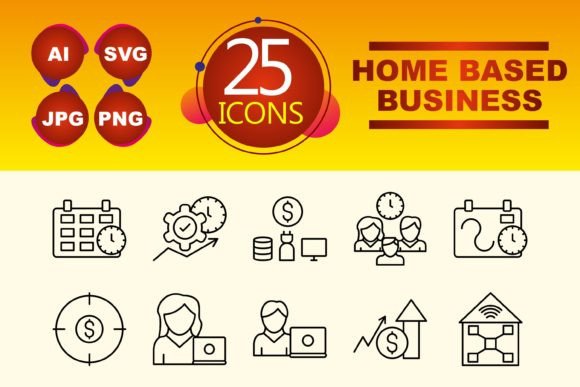
Home Based Business presents itself as a straightforward collection of icons. The design language is minimal, with clear shapes and subtle details that suggest professionalism and usability. The layout is organized, making it easy to navigate through different icons without visual clutter. Each icon is well-proportioned and maintains consistent spacing, which is a strong indicator of thoughtful design work.
What stands out most is the balance between simplicity and detail. While the icons are not overly complex, they still convey enough character to feel meaningful in an embroidered context. This makes them suitable for both personal and commercial use, especially when paired with appropriate fabric and thread choices.
Real-Life Scenario: Custom Tote Bag Design
Let’s imagine a scenario where I’m preparing a custom tote bag for a client. The theme is “Home Based Business,” and the client wants to highlight their small shop’s mission. I envision using one of the icons from Home Based Business to represent a home office or workspace. The icon could be placed near the handle or along the side seam, depending on the size and layout of the tote.
However, I need to consider the actual embroidery process. The icon needs to be large enough to maintain clarity after stitching, but not so large that it overwhelms the bag’s design. I would test the icon on scrap fabric first to see how it looks in practice. The stitch density will play a crucial role here—too dense, and the icon may become too detailed and lose its clean aesthetic; too sparse, and it might appear underwhelming.
Where to Use Home Based Business Carefully
While Home Based Business is versatile, there are situations where it might not perform as well. For instance, using it on small hoop sizes could lead to pixelation or loss of detail. Similarly, on textured fabrics, the design might not stitch as smoothly due to the uneven surface. Dark fabric backgrounds can also reduce the visibility of certain icons, especially those with subtle shading or gradients.
Icons like a laptop or a calendar may struggle on stretchy fabric or layered garments because of the potential for distortion. On curved surfaces such as caps or hats, the design may require additional adjustments to maintain alignment and clarity. Tiny lettering or decorative accents could also be lost in translation if not carefully reviewed before final stitching.
Visual Appeal and Stitching Clarity
One of the key factors in any embroidery project is how the design translates visually after stitching. Home Based Business has the potential to look great if used correctly. However, the success of the final product depends heavily on the choice of thread colors and stabilizer. A high-contrast thread color against a light background can enhance the design’s visibility, while a darker thread might blend in too much on dark fabric.
Stitch density is another critical consideration. A higher stitch density can add depth and definition, but it also increases the risk of bulkiness. As a designer, I always recommend checking the stitch density settings before proceeding with a full-scale project. Testing the design in black and white mockups can help identify any issues with contrast or clarity early on.
Product Value and Customer Trust
When creating a handmade product or selling through platforms like Etsy, the quality of your design directly affects customer trust and satisfaction. Home Based Business offers a professional look that aligns well with small business branding. However, it’s essential to ensure that the design performs consistently across different applications.
For example, if you’re creating a personalized gift such as a baby item or a holiday ornament, the design should remain recognizable even after repeated washing. Using the right stabilizer and ensuring proper hoop size can help maintain the integrity of the design over time.
Practical Design Notes for Embroidery Professionals
If you’re planning to use Home Based Business in a commercial setting, here are some key notes to keep in mind:
- Test on scrap fabric first to assess stitch clarity and overall appearance.
- Check thread color contrast against the intended fabric background.
- Review stitch density to ensure a balance between detail and practicality.
- Confirm hoop size to avoid distortion or pixelation.
- Inspect small details for clarity and legibility.
- Use proper stabilizer to prevent shifting or puckering during stitching.
- Test in black and white mockups to identify any hidden issues.
- Compare light and dark fabric backgrounds to ensure versatility.
- Ensure licensing rights before selling finished items or digital products.
By following these steps, you can confidently incorporate Home Based Business into your next embroidery project, whether it’s a custom sweatshirt, embroidered patch, or boutique product.